In today’s modern, flexible higher education landscape, self-paced learning and competency-based education (CBE) models have transformed how students earn college credit. Rather than sitting through weeks of passive lectures, learners can now leverage structured diagnostic tools to measure their knowledge, identify gaps, and streamline their path to degree completion. Among these tools, using pre-assessments and diagnostic practice tests effectively stands out as one of the most powerful learning strategies available to adult learners and college students alike.
This article explores how practice tests function as dynamic diagnostic tools, how to integrate structured practice strategies into your degree plan, and how to maximize your progress using academic acceleration methods.
Understanding the Role of Diagnostic Practice Tests
A practice test is far more than a final dress rehearsal before a high-stakes exam; when taken at the beginning or middle of a module, it serves as a precise course diagnostic. Diagnostic testing provides a baseline measurement of your existing knowledge, allowing you to tailor your study habits around what you actually need to learn rather than spending hours reviewing material you have already mastered.
Key benefits of using practice tests as course diagnostics include:
- Identifying Knowledge Gaps: Pinpointing specific chapters, concepts, or skill sets where your comprehension is weak.
- Preventing Passive Reading: Engaging in active retrieval practice, which significantly improves long-term retention compared to re-reading textbooks.
- Optimizing Study Time: Allowing you to bypass familiar topics and allocate focused study blocks to challenging subject matter.
- Building Exam Familiarity: Reducing test anxiety by acclimating yourself to item formats, question styles, and timing constraints early in the learning process.
The Diagnostic Workflow: From Pre-Assessments to Mastery
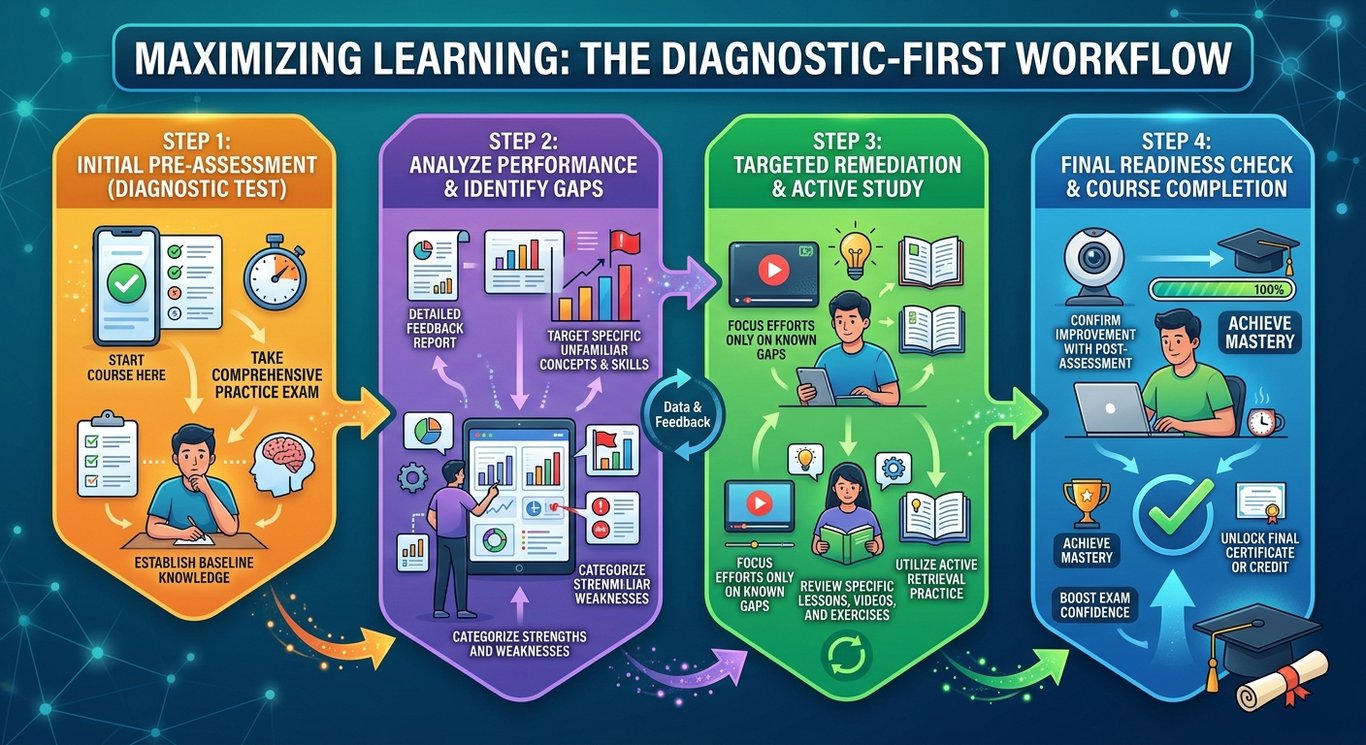
To turn practice exams into actionable learning plans, successful students adopt a structured diagnostic workflow. Instead of treating practice tests as passive evaluation steps, view them as an interactive roadmap for your coursework.
1. Baseline Pre-Assessments
Before diving into course modules or textbook chapters, begin by taking official pre-assessments. Taking an assessment prior to studying provides an unvarnished look at your starting baseline. Do not worry about getting a low score; the goal is simply to map out unfamiliar territory.
2. Item Analysis and Weakness Mapping
Once you complete a practice evaluation, review every question—especially the ones you answered incorrectly or guessed on. Categorize your errors into three distinct groups:
- Content Gaps: Fundamental lack of knowledge about a specific concept or formula.
- Misinterpretations: Misreading the question prompt or confusing similar terms.
- Silly Errors: Simple calculation errors or hasty misclicks.
3. Targeted Remediation
Focus your active study sessions strictly on your content gaps and misinterpretations. Utilize flashcards, targeted video lectures, and practice problems specific to those weak areas rather than re-reading the course sequentially.
4. Mid-Point Diagnostics
After completing targeted remediation, take a secondary practice set to confirm that your understanding has improved. This creates a feedback loop that validates your learning methods before you enter final testing environments.
Accelerating College Credit with Structured Practice Tools
For students enrolled in non-traditional or competency-based programs, diagnostic testing is the engine that drives rapid degree progression. Utilizing popular platform resources—such as a tailored Study.com practice test strategy—allows learners to gauge their readiness before committing to formal summative evaluations.
By using initial diagnostic sets to gauge topic mastery, students can systematically evaluate whether they are ready to test out Study.com course modules quickly or if further review is required. This diagnostic approach provides distinct operational advantages across various academic paths:
- Customized Study Schedules: You build a daily schedule based on diagnosed weaknesses rather than arbitrary syllabus timelines.
- Enhanced Confidence: Entering final evaluations with concrete performance data eliminates guesswork regarding your readiness.
- Resource Efficiency: Efficiently diagnosing your knowledge saves dozens of study hours per course, accelerating your overall pace.
Many working adults and transfer students utilize dedicated college save accelerator plans to complete general education requirements rapidly and affordably. In these accelerated learning models, diagnostic practice tests are essential for maintaining momentum while keeping costs down.
Preparing for High-Stakes Proctored Exams
While diagnostic practice tests offer room for trial and error, the ultimate goal of most credit-bearing online courses is passing official proctored exams. Modern proctored assessments evaluate your comprehensive understanding of course materials under secure monitoring conditions.
Transitioning from initial diagnostics to final proctored testing requires a slight shift in methodology:
- Simulate Real Test Conditions: As you approach the end of a course, take your Study.com final practice exam or equivalent post-assessment under strict testing conditions. Turn off study aids, enforce time limits, and sit in a quiet environment.
- Evaluate Score Consistency: Aim to score consistently higher on your diagnostic practice tests than the passing threshold required for the course. This safety cushion accounts for natural test-day stress during remote proctoring sessions.
- Review Technical Requirements: Ensure your testing environment, webcam, and software compatibility align with proctoring standards well before launch day.
Leveraging Academic Support and Program Mentors
Diagnostic data is not only useful for self-directed study; it also forms the ideal foundation for working with academic support staff. Share your practice test breakdown with university guidance staff or program mentors when discussing your course progress.
When meeting with educational advisors or mentors, your diagnostic results allow you to:
- Set Realistic Completion Targets: Propose realistic course completion dates based on accurate pre-assessment diagnostic scores.
- Receive Focused Advice: Ask targeted questions about complex subjects where practice scores indicate persistent difficulty.
- Refine Learning Strategies: Discuss alternative study techniques or supplemental materials tailored specifically to your learning style and weak areas.
Final Thoughts: Making Diagnostics Your Core Strategy
Treating tests solely as end-of-term evaluation tools leaves immense learning potential on the table. By shifting your mindset to view practice tests as interactive diagnostic tools, you take direct control of your education.
Whether you are seeking to streamline coursework, maximize efficiency through structured credit acceleration tools, or prepare thoroughly for final proctored evaluations, starting with thorough diagnostic practice sets will ensure your study time is focused, effective, and efficient. Emphasize active retrieval, review your diagnostic analytics closely, and leverage structured practice tests as your primary roadmap to academic success.